20 Aug 2026
 Data from multiple jurisdictions show that betting operators rely on algorithmic models to establish initial lines for combat sports, racquet events, and pitch-based competitions, while subsequent adjustments often reflect aggregated bettor activity. Researchers at the University of Nevada, Reno documented in 2025 how machine learning systems process historical performance metrics, injury reports, and environmental variables to generate baseline odds for mixed martial arts bouts and professional tennis matches. These systems update continuously as new information arrives, yet operators in regulated markets still monitor real-time wagering patterns that can shift those same lines by several points within hours. Pitch-based events such as baseball and cricket present distinct challenges because algorithms must account for variable playing surfaces and weather conditions that change rapidly. A 2024 report from the Australian Institute of Sport examined how predictive models incorporate pitch reports and humidity data to forecast run totals, while noting that heavy betting on one side frequently prompts oddsmakers to move totals or spreads to balance exposure. Bettor sentiment, measured through ticket counts and handle distribution, appears in industry analyses as a secondary input that operators weigh against their proprietary forecasts.
Algorithmic Foundations in Line Setting
Operators in Nevada and other regulated jurisdictions feed vast datasets into proprietary algorithms that calculate probabilities for fight outcomes, set durations, and point spreads. These models draw on longitudinal statistics that include strike accuracy, serve percentages, and historical scoring rates, then output initial lines that reflect calculated edges. According to figures released by the Nevada Gaming Control Board, algorithmic adjustments occurred in over 70 percent of combat sport events during the first half of 2026, with most changes triggered by late roster updates or training camp reports rather than public money.
Similar processes apply to racquet sports where serve velocity trends and surface-specific win rates feed directly into expected value calculations. Observers note that models often assign higher weight to recent head-to-head data when establishing tennis sets and games totals, producing lines that remain relatively stable until significant late money arrives. In pitch-based disciplines, algorithms integrate ball-tracking data and park factors to project totals, creating baselines that operators then monitor against incoming wagers.
Bettor Sentiment as a Market Signal
Public betting volume functions as an observable signal that operators track through automated systems. When a disproportionate share of tickets or handle lands on one fighter or one side of a tennis spread, lines may move to manage liability even if the underlying algorithmic forecast remains unchanged. Data compiled by the Canadian Gaming Association indicate that sentiment-driven movements accounted for roughly 35 percent of in-week adjustments across major combat and racquet events during the 2025 season, with the remainder driven by new statistical inputs.
August 2026 schedules include several high-profile mixed martial arts cards and tennis majors where early lines opened with limited public input and later shifted after sharp and recreational action concentrated on specific outcomes. Operators report that such movements occur most visibly in markets with high recreational participation, where sentiment clusters around recognizable names or recent highlight performances.
Comparative Dynamics Across Sport Categories
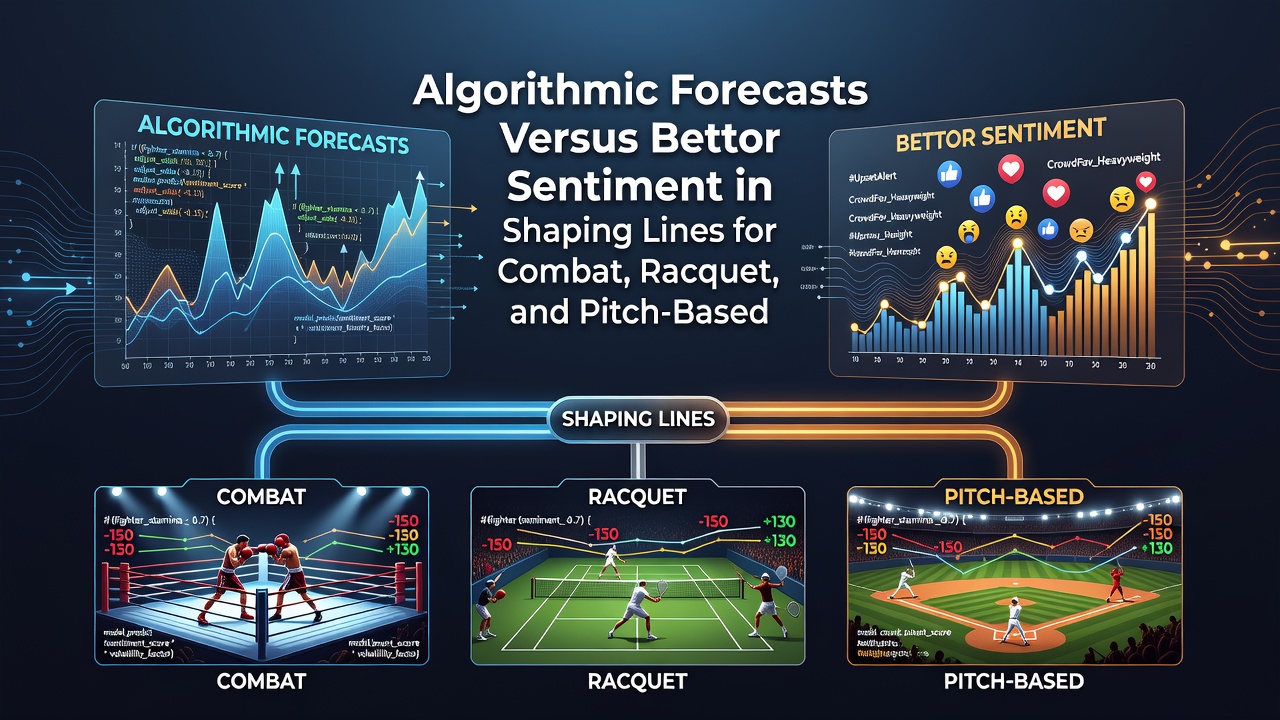
Combat events tend to exhibit sharper sentiment responses because outcomes hinge on single decisive moments that casual bettors find easy to visualize. Algorithms therefore build conservative buffers into early lines, anticipating that public money will cluster quickly once weigh-in results or narrative angles circulate. Racquet competitions, by contrast, generate steadier algorithmic lines because match length and set scoring produce more granular data points that models can refine incrementally. Pitch-based contests sit between these poles, with algorithms handling complex variables such as park effects and pitch counts while sentiment often focuses on starting pitchers or team totals.
Industry reports from the European Gaming and Betting Association show that operators in multiple markets now employ hybrid systems that flag when sentiment deviates significantly from algorithmic probabilities. These flags trigger manual reviews that determine whether a line adjustment serves risk management or simply follows the market. Such reviews occur more frequently during August windows when overlapping combat pay-per-view events and late-summer baseball schedules increase overall betting volume.
Conclusion
Available regulatory data and academic analyses indicate that algorithmic forecasts supply the structural backbone for initial lines across combat, racquet, and pitch-based events, while bettor sentiment supplies a dynamic overlay that operators monitor and sometimes incorporate through measured adjustments. The relative influence of each factor varies by sport, market liquidity, and time until the event, yet both remain integral to how lines evolve in regulated environments. Continued collection of handle distribution statistics and model performance metrics will clarify how these two inputs interact as data sources and betting platforms expand.