26 Oct 2026
Biometric Sensors Redefine Match Predictions Across Cricket Pitches, Rugby Grounds, and Esports Stages
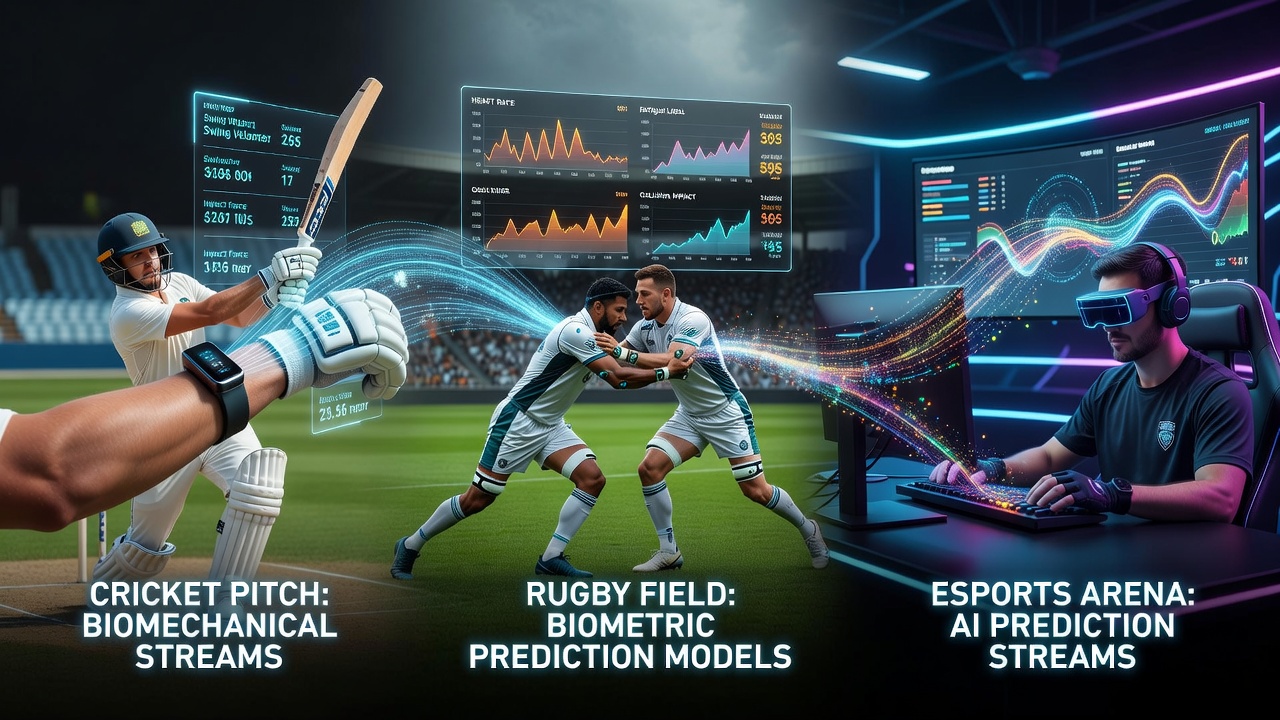
Data from recent implementations shows biometric wearables feeding continuous streams into prediction models that adjust probabilities for outcomes in cricket, rugby, and esports events. These devices track heart rate variability, acceleration patterns, muscle fatigue indicators, and movement efficiency, then route the information through algorithms that update forecasts in real time.
Cricket Applications and Data Integration
Cricket teams have adopted chest straps and smart insoles that capture stride length, bowling speed consistency, and recovery metrics between overs. Analysts at several professional franchises integrate this information with historical performance databases, allowing models to recalculate batsman strike rates and bowler economy figures as fatigue accumulates. One study from the University of Queensland found that incorporating wearable-derived fatigue scores improved short-term outcome projections by measurable margins during T20 innings.
Operators monitoring live markets observe these adjusted projections influencing implied probabilities for next-over events and individual player milestones. The streams operate alongside traditional statistics such as pitch reports and weather data, creating layered inputs that refine estimates continuously rather than at fixed intervals.
Rugby Field Deployments
Rugby unions and clubs equip players with GPS-enabled vests and heart-rate monitors that log tackle impact forces, sprint distances, and positional workload. Governing bodies in Australia and New Zealand publish aggregated datasets that research groups use to validate prediction frameworks. These datasets reveal correlations between accumulated high-intensity efforts and reduced accuracy in set-piece execution during later match stages.
Prediction engines now ingest this workload information to adjust expected points from scrums, lineouts, and attacking phases. Observers note that models incorporating these variables generate updated probabilities for try-scoring sequences and penalty goal success rates that shift noticeably when key forwards approach fatigue thresholds.
Esports Arena Implementations
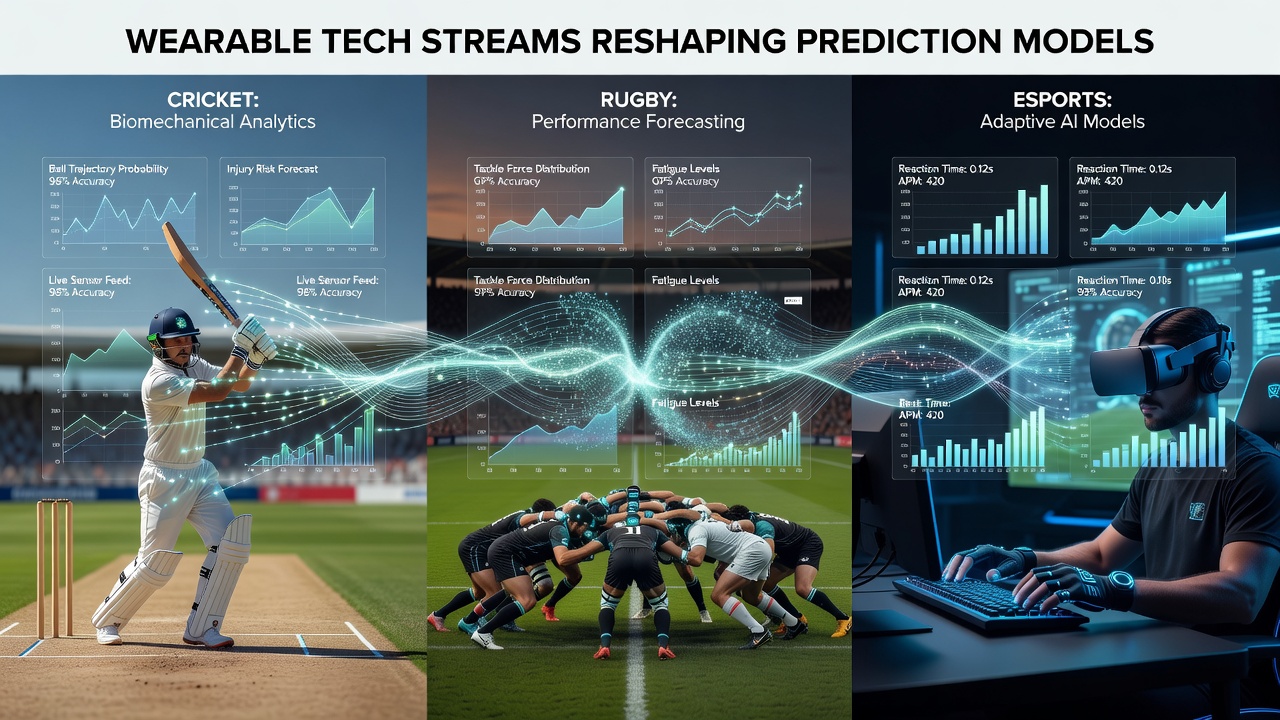
Esports organizations equip competitors with wrist-based sensors and eye-tracking hardware that record reaction times, stress indicators, and postural stability during extended sessions. Data collected at major tournaments in October 2026 demonstrates how elevated heart-rate variability correlates with decision latency in fast-paced titles. Research teams at institutions including Stanford University have published findings showing these physiological markers improve model accuracy when forecasting map-win probabilities and round-level outcomes.
Platforms processing live event data combine sensor outputs with in-game metrics such as kill-death ratios and economy management. The resulting hybrid models update expected values for team performance indicators more rapidly than systems relying solely on historical match logs.
Cross-Sport Technical Patterns
Common architectures appear across the three domains. Edge computing devices process raw sensor signals locally before transmitting summarized metrics to central servers. Machine-learning pipelines then merge these metrics with domain-specific variables such as ball-tracking data in cricket, scrum engagement statistics in rugby, and ability cooldown timers in esports. Organizations report reduced latency in forecast updates, with some systems refreshing projections every few seconds during active play.
Industry reports from bodies like the Sports Tech Research Network indicate growing adoption rates among professional leagues. These reports document standardized data formats that allow third-party analysts to incorporate wearable streams into proprietary models without extensive custom integration work.
Regulatory and Infrastructure Developments
Privacy frameworks in multiple jurisdictions now address athlete biometric data handling. The Australian Sports Commission released guidelines in 2025 that outline consent requirements and anonymization protocols for performance datasets. Similar discussions continue within European sports federations regarding storage and sharing of real-time physiological information.
Infrastructure investments include expanded 5G coverage at major venues and cloud partnerships that support higher-frequency data ingestion. These upgrades enable the continuous model refreshes that distinguish current prediction systems from earlier static approaches.
Conclusion
Wearable technology continues to supply granular inputs that reshape how analysts construct and maintain prediction models in cricket, rugby, and esports environments. The integration of biometric streams with established performance metrics produces forecasts that evolve alongside match conditions, supported by expanding technical infrastructure and evolving data governance practices.