20 Aug 2026
Ground Conditions and Elevation: Their Influence on Outdoor Athletic Performances
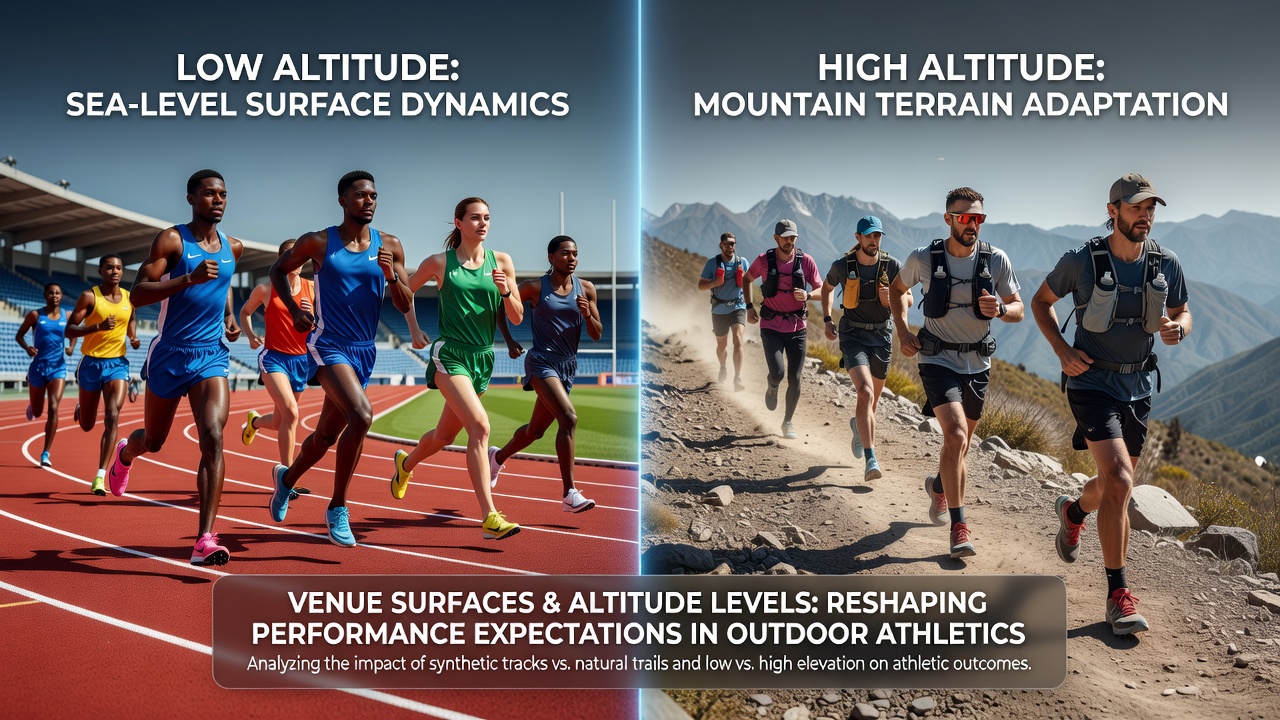
Outdoor athletic events unfold across a wide range of playing surfaces and elevation profiles, each of which alters movement patterns, equipment behavior, and physiological demands in measurable ways. Researchers have documented these variables through controlled studies and competition data, revealing consistent patterns across sports such as soccer, tennis, track and field, and cycling. Surface composition affects traction, energy return, and injury rates, while altitude changes oxygen availability and projectile trajectories, reshaping expectations for athletes preparing for specific venues.
Surface Types and Their Measurable Effects
Grass fields, artificial turf, clay courts, and synthetic tracks each produce distinct performance signatures. Natural grass tends to slow ball roll in soccer compared with artificial turf, where studies show average speeds increase by 5 to 8 percent on well-maintained synthetic surfaces according to data compiled by the International Federation of Association Football. Clay courts in tennis extend rally lengths because the ball bounces higher and slows upon impact, leading to different point-construction strategies than those observed on grass or hard courts. Track surfaces vary from traditional cinder to modern polyurethane, with the latter providing greater energy return that correlates with faster sprint times in elite competitions.
Those who have analyzed competition logs note that surface hardness directly influences stride frequency and ground reaction forces. Harder surfaces transmit more impact through the body, prompting athletes in distance events to adjust pacing to manage cumulative stress. Softer surfaces absorb energy but can increase fatigue through greater muscular effort required for propulsion. Maintenance practices also matter, as uneven wear on grass or degraded turf alters footing unpredictably during extended matches or races.
Altitude as a Physiological and Aerodynamic Factor
Elevation above sea level reduces air density, which affects both human respiration and the flight characteristics of balls and projectiles. Venues such as those in Denver or Mexico City sit at altitudes exceeding 1,500 meters, where partial pressure of oxygen drops enough to reduce maximal oxygen uptake by 10 to 15 percent in unacclimatized athletes. Endurance events therefore show slower winning times at these locations, whereas events relying on power or technique experience different adjustments because lighter air allows objects to travel farther.
Baseball and soccer data collected at high-altitude stadiums demonstrate increased home-run distances and longer throw ranges, prompting teams to modify defensive positioning and pitching selections. Runners in middle-distance events often record faster times in sprints at altitude due to reduced air resistance, yet they face greater recovery challenges between heats. Observers tracking multi-day tournaments note that athletes who arrive early for acclimatization maintain steadier performance curves than those who travel in closer to competition dates.
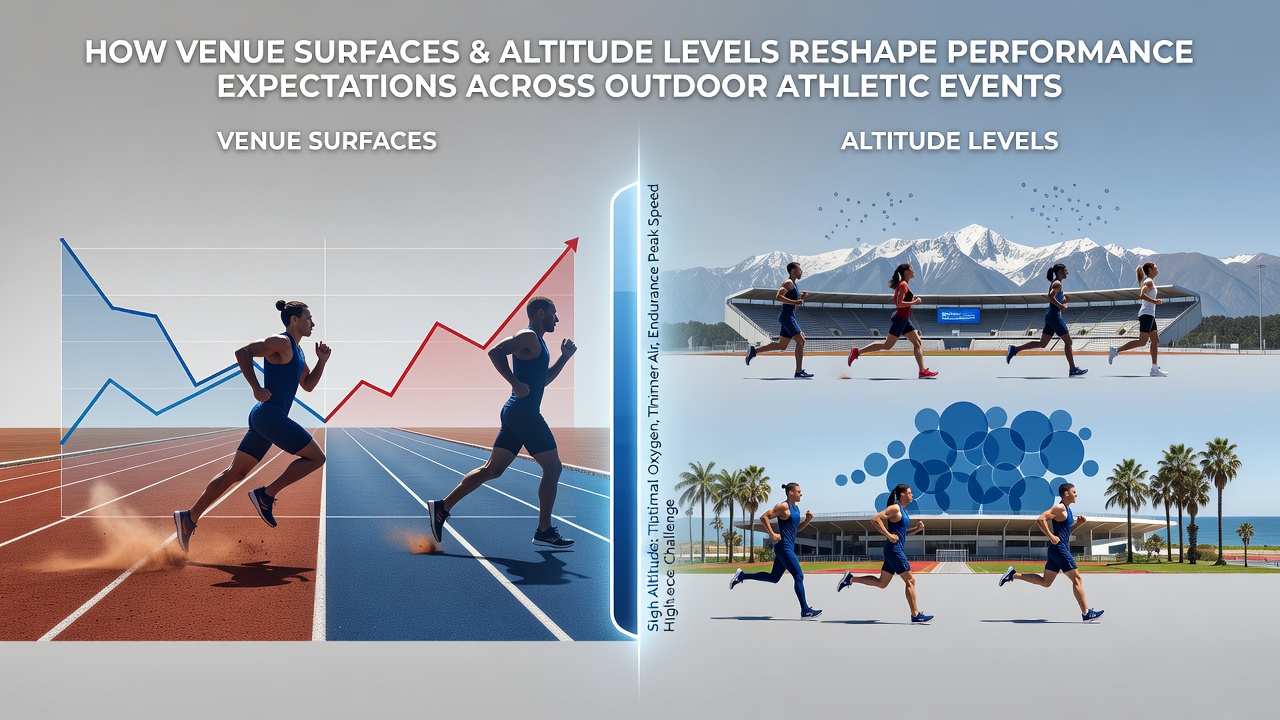
Combined Surface and Altitude Interactions in August 2026 Events
As schedules for major outdoor competitions in August 2026 take shape, organizers and medical teams are reviewing venue-specific profiles that combine particular surface materials with elevation ranges. Data from prior cycles indicate that athletes who train on replica surfaces at simulated altitudes achieve better adaptation in both aerobic capacity and movement efficiency. For instance, cyclists preparing for mountain stages must account for thinner air reducing cooling efficiency while also contending with road surfaces that vary from smooth asphalt to rough chip-seal.
Studies conducted by institutions such as the Australian Institute of Sport have quantified how combined stressors affect decision-making speed under fatigue. Teams in invasion sports adjust tactics when playing on fast turf at elevation, favoring shorter passing sequences because the ball travels farther and quicker. Similar patterns appear in field hockey and lacrosse, where surface bounce and air density together alter shot velocities and defensive reaction windows.
Equipment and Rule Adjustments Across Venues
Governing bodies respond to these environmental variables with equipment specifications and rule modifications. Tennis balls used at high altitude receive internal pressure adjustments to counteract excessive flight distances, while track and field implements remain standardized yet athletes select different spike configurations depending on surface resilience. Cycling federations publish tire pressure guidelines tailored to road surfaces at various elevations to optimize rolling resistance without sacrificing grip.
Research from the Canadian Olympic Committee shows that athletes who test multiple surface-altitude combinations during preparation camps reduce performance variability once competition begins. These protocols include monitoring stride mechanics on different track materials and adjusting hydration strategies to offset increased respiratory water loss at elevation.
Conclusion
Venue surfaces and altitude levels produce predictable, documented shifts in athletic output across outdoor events. Surface traction and energy return interact with reduced air density to change speeds, distances, and recovery demands in ways that preparation protocols now routinely address. Continued collection of competition data at diverse sites allows federations and athletes to refine training and equipment choices ahead of events scheduled through 2026 and beyond.