24 Aug 2026
Real-Time Data Streams from Wearables Reshaping Live Betting Markets in Golf, Boxing, and Thoroughbred Racing
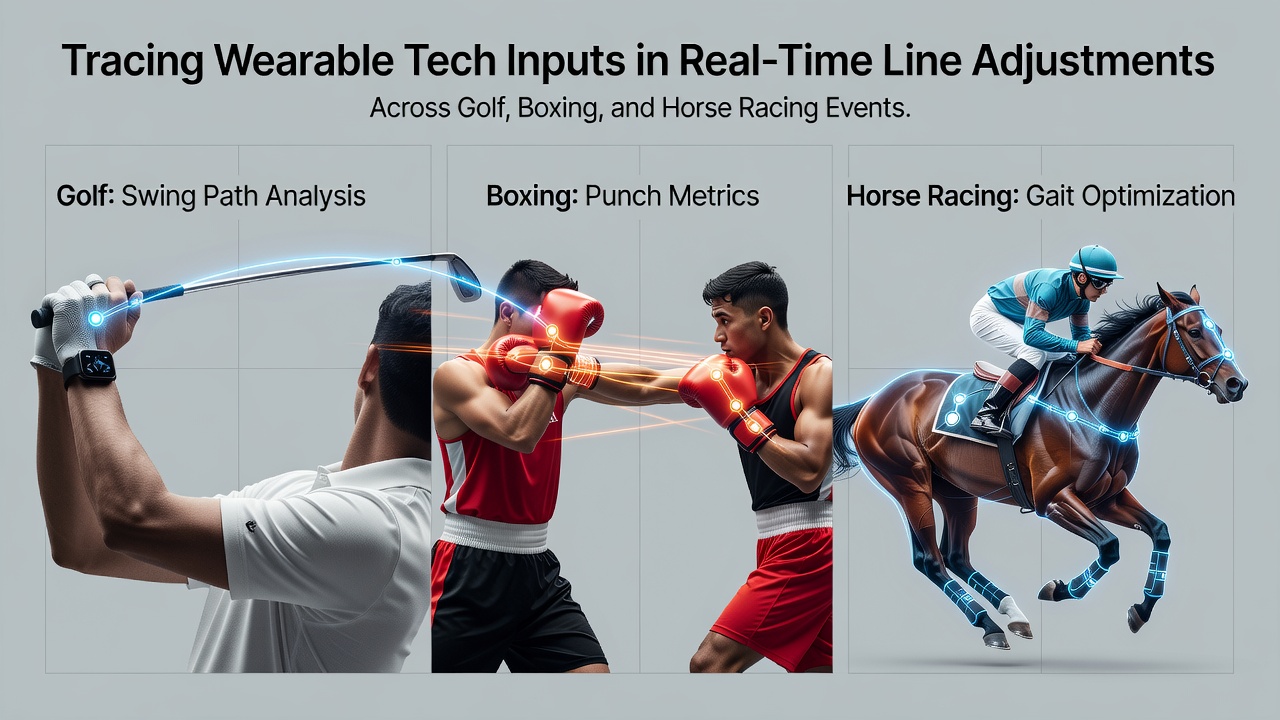
Technological integration has accelerated across professional sports, and wearable devices now feed continuous streams of biometric and movement data into systems that adjust live betting lines in golf, boxing, and horse racing, with observers noting particular activity during the packed August 2026 schedule.
Golf: Sensors Tracking Swing Mechanics and Fatigue
Golf tournaments rely on GPS-enabled watches and motion-capture sensors that record club-head speed, swing path, and heart-rate variability throughout rounds, while data aggregators compile these inputs to flag deviations from established player baselines, prompting oddsmakers to revise hole-by-hole and match-play propositions within seconds of each shot. Studies conducted by the University of Queensland's sports analytics program have documented how elevated heart rates detected mid-round correlate with increased putting errors, allowing platforms to tighten over/under totals on individual player birdie counts almost immediately after the information reaches central servers.
Course conditions in August 2026 events further amplify these adjustments, because heat and humidity readings captured by the same wearables influence stamina projections, and betting operators respond by shifting lines on late-round birdie probabilities for athletes whose recovery metrics drop below thresholds established in earlier practice rounds.
Boxing: Impact Sensors and Recovery Indicators
Boxing bouts incorporate accelerometer-equipped gloves and chest straps that measure punch velocity, force distribution, and post-round lactate levels, while these metrics reach analysts who recalibrate round-total and fighter-performance lines between rounds. Research published through the Canadian Sport Institute Pacific indicates that fighters showing reduced punch output after the third round experience measurable drops in win-probability estimates, and live markets reflect those shifts within the interval before the next bell.
Promoters and data vendors have expanded sensor deployment ahead of August 2026 title fights, enabling more granular tracking of footwork efficiency and head-movement frequency, both of which directly feed models that update underdog payouts when a previously favored contender displays early signs of fatigue.
Horse Racing: Biometric Monitoring on the Track
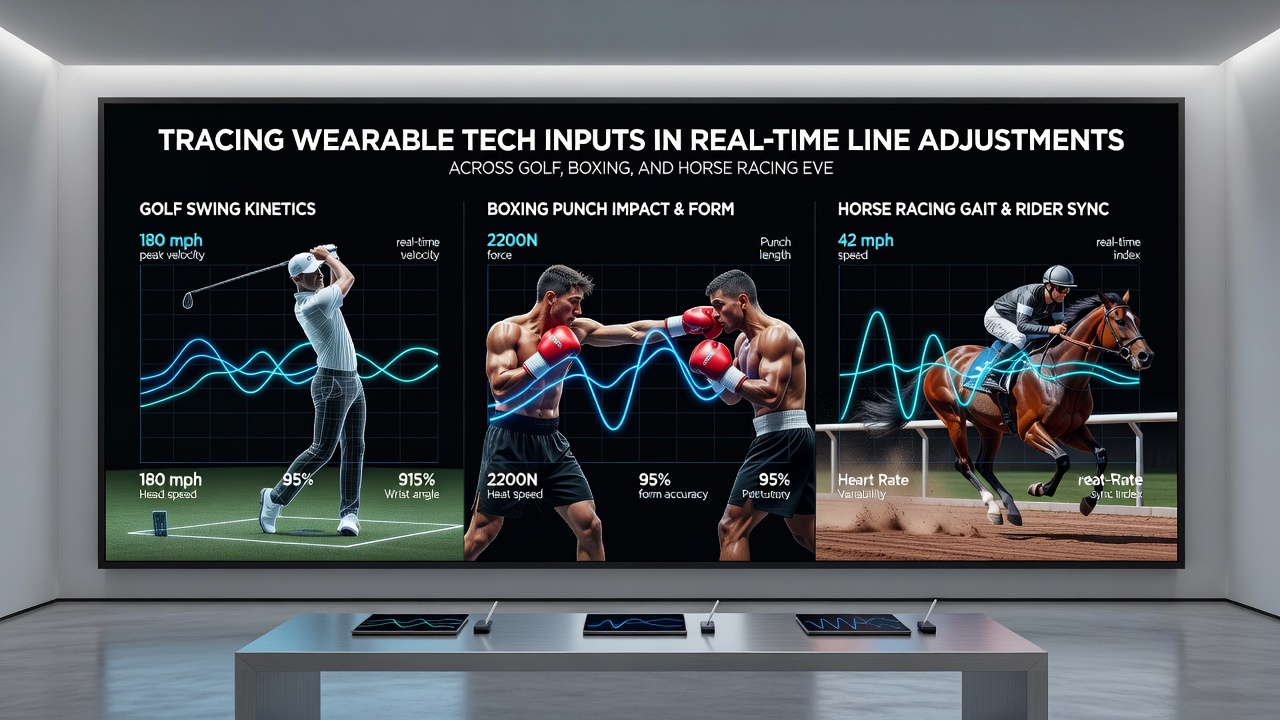
Thoroughbred racing employs saddle-based heart-rate monitors and stride-length sensors that transmit data from the moment horses leave the paddock until they cross the finish line, and these continuous readings allow bookmakers to modify place and show odds when a favorite's cardiovascular response deviates from historical patterns recorded in similar track conditions. Figures released by the Hong Kong Jockey Club's performance laboratory demonstrate that elevated heart rates during the final furlong often precede slower closing splits, prompting immediate downward adjustments to win-market liabilities.
August 2026 meetings at major tracks have seen expanded use of these devices across both flat and jump races, because regulatory bodies in multiple jurisdictions now require standardized sensor protocols that feed directly into centralized data hubs used by betting exchanges and traditional operators alike.
Integration of Wearable Inputs into Live Markets
Operators combine wearable outputs with existing statistical models through application programming interfaces that process thousands of data points per minute, while oddsmakers apply weighting algorithms that prioritize recent biometric trends over longer-term averages when conditions change rapidly. Industry reports from the European Gaming and Betting Association highlight how such integration reduces latency between on-course or in-ring events and line movements, creating tighter spreads that reflect real-time physiological states rather than pre-event projections alone.
Cross-sport platforms have adopted similar pipelines for golf leaderboards, boxing scorecards, and horse-racing results, enabling simultaneous adjustments across multiple markets when a single athlete or animal exhibits measurable fatigue indicators mid-event.
August 2026 Implementation Patterns
During the current August schedule, multiple governing bodies have coordinated with technology providers to standardize data formats, resulting in more consistent feeds that reach betting systems without the delays observed in earlier seasons. Observers note that these standardized protocols have coincided with higher volumes of in-play wagers, because participants receive confirmation that line movements align directly with verified sensor readings rather than anecdotal reports from trackside or ringside observers.
Academic reviews from institutions across North America and Europe continue to examine the accuracy of these predictive models, comparing sensor-derived forecasts against final outcomes to refine weighting parameters for future events.
Conclusion
Wearable technology has established direct pathways from athlete and equine physiology to real-time betting adjustments across golf, boxing, and horse racing, with data streams processed through established analytical frameworks that operate continuously during August 2026 competitions. Regulatory and industry sources confirm that the volume of sensor-generated inputs has grown steadily, supporting more responsive line management while maintaining compliance with jurisdictional reporting requirements.