10 Aug 2026
Time Zone Variations Reshaping Betting Markets in Rugby Tours and Golf Majors

Time differences create distinct patterns in how wager lines move during rugby tours and golf majors that span multiple continents, and operators adjust odds in real time to match betting volumes from regions waking or sleeping at different hours. Markets open earlier for bettors in Asia when events unfold in Europe, while North American participants often place late-night wagers that shift lines before European traders resume activity the next morning. Data from international sports betting platforms shows volume spikes align with local peak hours rather than event start times, which forces bookmakers to recalibrate spreads and totals continuously.
Rugby Tours and Cross-Continent Scheduling Pressures
Rugby tours such as the British and Irish Lions series or Rugby Championship matches place teams in time zones that separate by eight to twelve hours from major betting markets in the UK, Australia, and the United States. When a match kicks off in Sydney at 7:30 p.m. local time, it reaches afternoon in London and early morning on the US west coast, prompting sequential waves of activity that alter live odds on tries, penalties, and match totals. Observers note that lines on player performance props tighten or widen depending on which region's bettors dominate the flow at any given moment, because Asian markets tend to favor certain statistical outcomes while European volumes push totals higher during evening sessions.
August 2026 features several high-profile rugby fixtures scheduled across the southern hemisphere, including preparatory tours that begin in New Zealand and move to South Africa within a ten-day window. Those overlapping calendars mean some matches start while bettors in one hemisphere finish their workday and others begin theirs, producing staggered liquidity that requires constant line management. Research from sports analytics firms indicates that totals markets in these windows move an average of 1.5 points more than single-time-zone events because of the layered participation.
Golf Majors and Global Leaderboard Dynamics
Golf majors present similar challenges because rounds stretch across multiple days and courses sit in different hemispheres during the same calendar year. The Open Championship in the UK draws heavy overnight betting from Australian and Asian participants, whereas the Masters in the United States sees European markets react during early morning hours when final-round play concludes. Those staggered responses create ripples in outright winner odds and round-by-round prop bets that rarely appear in domestic tournaments confined to one time zone.
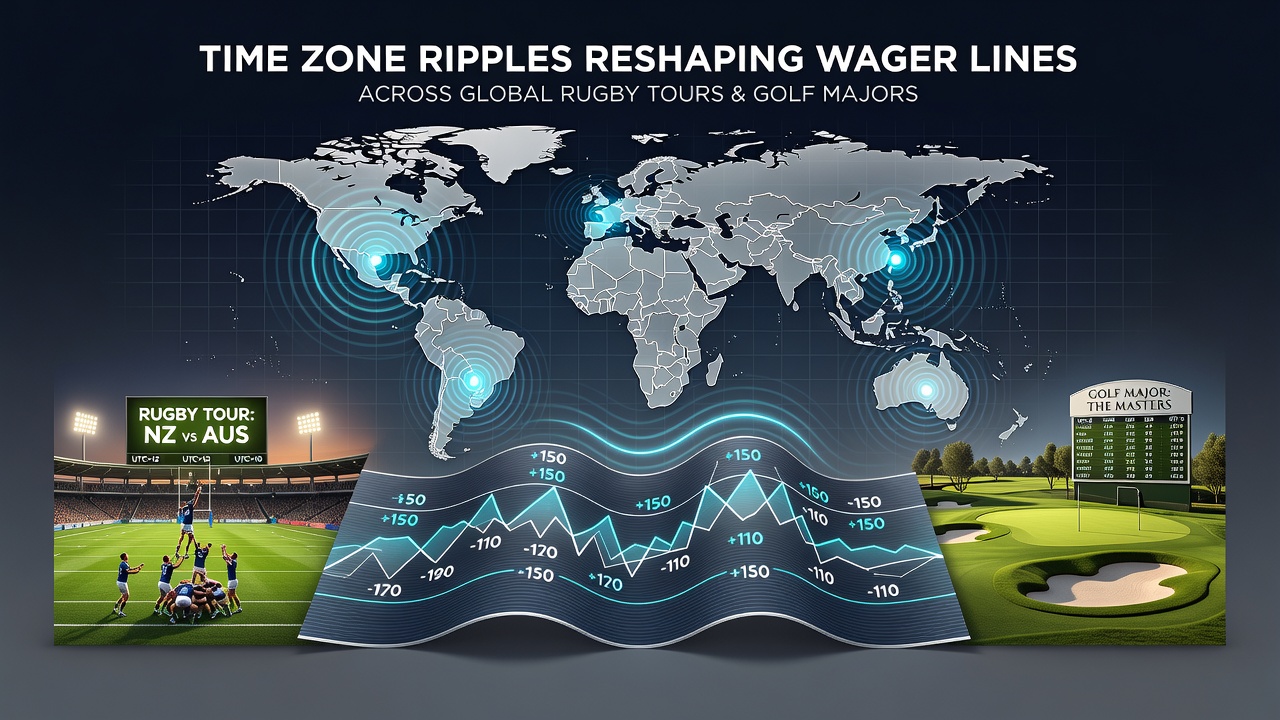
Studies published by the International Gaming Institute at UNLV document how live betting volumes on golf leaderboards peak in three distinct windows when events cross the dateline, and each window carries its own bias toward birdie totals or head-to-head matchups. Bookmakers therefore widen spreads on certain pairings during low-liquidity periods to protect against concentrated bets from one region, then tighten them once global participation balances out. This adjustment cycle repeats across the four majors and several signature events each season.
Market Adjustments and Data Patterns
Operators track participation by IP address and account registration country to anticipate which lines will receive the next surge of action, allowing them to move numbers before large bets arrive. Figures released by the Australian Gambling Research Centre show that rugby and golf events generate 18 percent higher handle when start times fall between 6 p.m. and midnight across at least two major betting jurisdictions. Those periods also produce more frequent line changes because bettors in later time zones react to early scores that have already moved markets in earlier jurisdictions.
Live odds on rugby try scorers and golf hole-by-hole props illustrate the effect most clearly, since these micro-markets attract regional preferences that shift rapidly once new participants enter. A prop on a South African forward to score first may shorten quickly during Australian evening hours, then lengthen again when North American bettors focus on total points instead. Golf birdie props follow parallel cycles, with Asian markets often favoring low-scoring rounds and European markets pushing higher totals once play extends into evening light.
Conclusion
Time zone differences continue to influence how wager lines evolve during rugby tours and golf majors because participation arrives in sequential waves rather than a single concentrated period. Operators respond with dynamic adjustments that reflect both volume and regional preferences, while data from regulatory and research bodies documents measurable differences in handle and line movement compared with single-zone events. Those patterns remain consistent across schedules that place matches and rounds in distant hemispheres, and August 2026 events will follow the same established rhythms.