15 Aug 2026
Utilizing Machine Learning Algorithms to Decode Betting Patterns in Professional Basketball, Grand Slam Tennis, and Competitive Gaming Tournaments

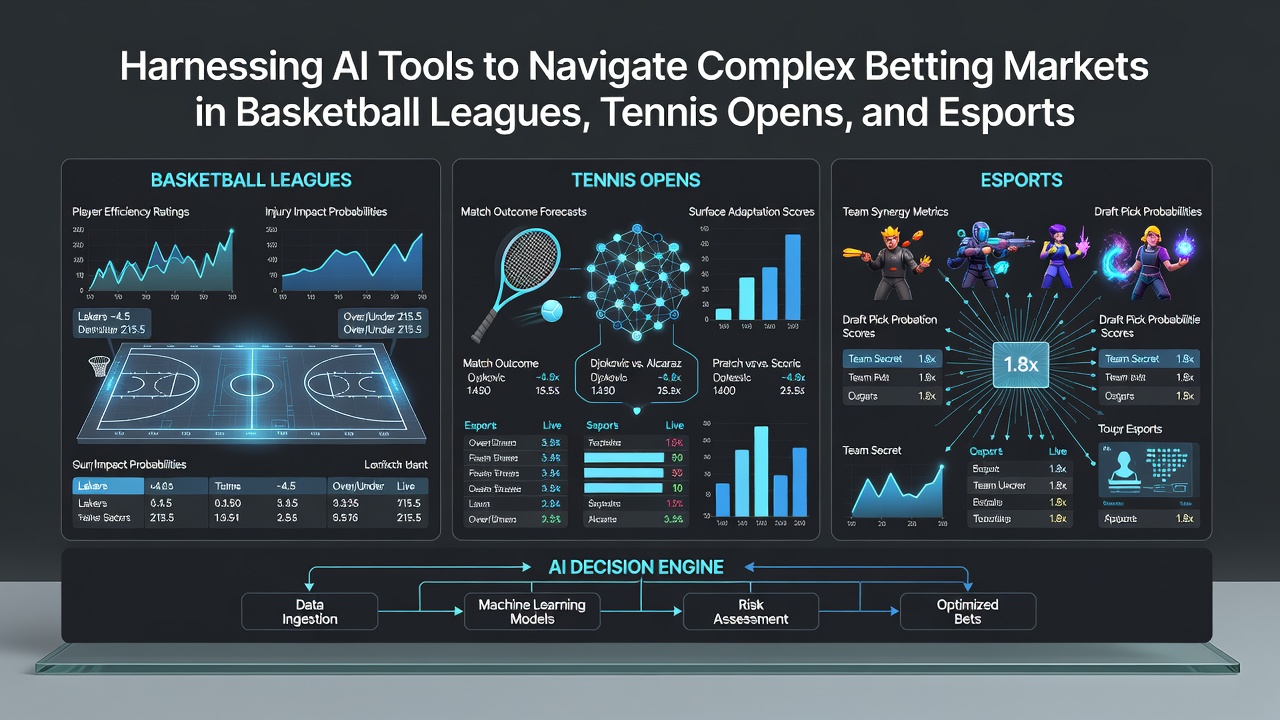
Artificial intelligence systems now process vast datasets from basketball leagues, tennis opens, and esports tournaments to identify value in shifting odds, and observers note that these tools integrate player statistics, historical match outcomes, and live event feeds into predictive models. Research from academic institutions shows that machine learning frameworks can evaluate thousands of variables simultaneously, including shooting percentages in the NBA and serve win rates during the US Open, which typically unfolds in late summer months such as August 2026.
Core Mechanisms Behind AI Betting Analysis
Neural networks trained on extensive archives of game logs extract patterns that traditional statistical methods often overlook, while random forest algorithms rank the influence of factors like fatigue from back-to-back fixtures in basketball schedules or surface adaptations in tennis. Data from multiple professional circuits indicates that these models update continuously during matches, recalibrating probabilities as points accumulate in esports titles such as Dota 2 or Valorant. Those who have examined the outputs report that ensemble methods combining several algorithms reduce variance in projected results across different sports.
Application in Basketball League Markets
Professional basketball presents dense layers of betting options, from total points scored to individual player props, and AI platforms aggregate telemetry from wearable devices alongside box score histories to forecast deviations from opening lines. Studies conducted by university research groups have documented how convolutional neural networks analyze video footage to quantify defensive schemes that affect scoring efficiency. In leagues operating through August 2026, such tools highlight discrepancies when teams rest key players ahead of playoff positioning, allowing bettors to cross-reference model outputs with roster announcements released by league offices.
Insights for Tennis Open Events
Grand Slam tournaments generate intricate wagering structures around set scores, game totals, and in-play momentum shifts, and AI systems parse ball-tracking data to estimate rally lengths and break-point conversion rates under varying conditions. Evidence from sports science repositories reveals that recurrent neural networks capture sequences in player movement that precede momentum swings during extended matches. Observers following the North American hard-court swing note that these models incorporate humidity readings and court speed measurements collected by tournament organizers, which influence ball behavior and therefore influence live odds adjustments.
Handling Esports Tournament Complexity
Esports competitions feature rapid meta shifts and patch updates that alter character viability, and machine learning pipelines ingest draft statistics alongside map win rates to project series outcomes in events spanning multiple regions. Industry reports compiled by gaming analytics firms demonstrate that reinforcement learning agents simulate thousands of hypothetical matches to stress-test betting strategies against volatility spikes common in best-of-five formats. Participants in major circuits during 2026 have seen AI dashboards flag discrepancies between implied probabilities and actual historical frequencies when teams transition between online qualifiers and lan finals.
Integration of Real-Time Data Streams
Live betting environments demand sub-second processing of incoming information, and AI architectures fuse optical tracking feeds with social sentiment indicators scraped from public platforms to detect narrative-driven line movements. According to findings released by the Australian Gambling Research Centre, such integrated systems have shown measurable accuracy gains when applied across time zones where basketball, tennis, and esports events overlap. Practitioners emphasize that calibration against verified results remains essential to prevent drift in model performance over extended seasons.
Challenges and Validation Approaches
Model interpretability continues to pose difficulties because deep learning outputs can obscure the specific drivers behind a recommendation, yet techniques such as SHAP value analysis provide feature attribution that regulators and operators review for transparency. Research published through the IEEE Transactions on Games outlines validation frameworks that compare AI-generated probabilities against bookmaker closing lines across thousands of events, confirming statistical edges in select market segments. Those monitoring implementation note that periodic retraining with fresh data prevents degradation when rule changes or roster turnover alter underlying distributions.
Conclusion
Artificial intelligence tools supply structured methods for processing the multilayered information inherent in basketball, tennis, and esports betting markets, and continued refinement of these systems aligns with expanding data availability from governing bodies and technology providers. Figures compiled by independent research entities indicate steady adoption rates among professional analysts who combine algorithmic outputs with domain knowledge to refine position sizing and risk parameters. As tournaments progress through periods such as August 2026, the interplay between automated pattern recognition and human oversight shapes how participants navigate these environments.